

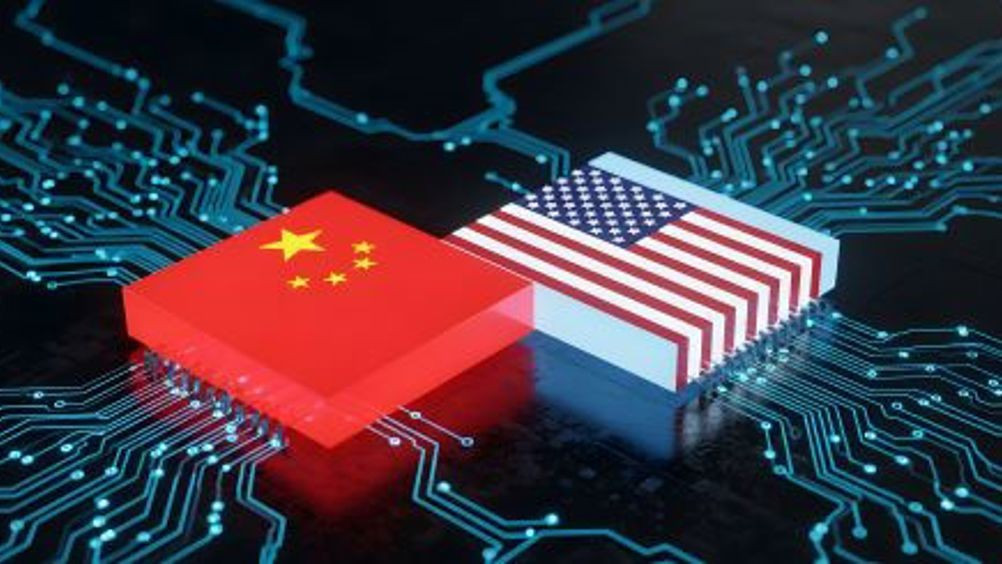
The White House says its plan to allow export of Nvidia‘s H200 artificial-intelligence chips to China fits within U.S. national security and export controls, insisting that more advanced Blackwell chips will remain in America and that the H200s will undergo U.S. security inspections before shipment, even as lawmakers from both parties raise concerns that such exports could aid Chinese technological and military capabilities and undermine longstanding export restrictions.
Key Takeaways
– The administration is moving forward with controlled exports of Nvidia H200 AI chips to approved Chinese customers, while officially barring the most advanced chips and claiming security safeguards.
– Critics argue selling powerful AI chips to China could strengthen Beijing’s AI and military technology, sparking backlash from both Republican and Democratic lawmakers.
– The policy includes conditions like security inspections and a revenue share for the U.S., but raises broader questions about export control strategy and U.S.–China tech competition.
In-Depth
In recent weeks, the White House has doubled down on a controversial decision to permit the export of Nvidia’s H200 artificial-intelligence chips to China, arguing that it fits within the framework of U.S. national security policy and economic interests. The story highlights the growing tensions between maintaining U.S. technological leadership and protecting national security while navigating a competitive, global tech marketplace.
At the core of this debate is the Trump administration’s decision to allow Nvidia to sell its H200 AI accelerators to vetted customers in China. These chips are not the absolute cutting edge—Nvidia’s newest Blackwell chips are explicitly excluded from the arrangement—but they are nonetheless significantly more powerful than earlier models that were previously authorized for export. The White House insists that the export of these H200 chips will only occur after they undergo security inspections in the United States, a safeguard intended to prevent misuse or diversion, and that stringent export control regimes remain in place for more advanced technologies. This narrative reflects a desire to thread the needle between national security concerns and economic realities in a complex international environment.
Supporters of the policy argue that it protects U.S. interests in several ways. By allowing American companies like Nvidia to access the immense Chinese market under strict conditions, the administration claims it preserves U.S. innovation, supports domestic jobs, and ensures that China remains dependent on U.S. technology rather than independently closing the AI capability gap. There is also an economic component to the deal: the U.S. government will collect a meaningful percentage of revenue from these exports, positioning this arrangement as a pragmatic compromise that delivers value back to American taxpayers while supporting the competitiveness of U.S. industry on the global stage.
Nevertheless, the decision has ignited a firestorm of criticism from both sides of the political aisle. Republican lawmakers who normally champion a strong stance against China’s geopolitical ambitions have voiced alarm that sending powerful AI chips to Beijing could inadvertently enhance Chinese military capabilities and undercut U.S. leverage. Some argue that this policy amounts to a strategic concession to a strategic rival at a time when China’s global ambitions are clearer than ever. If China’s technological and military advantages grow, critics say, U.S. influence and national security could be compromised, regardless of revenue share or inspection protocols. Democratic lawmakers have similarly criticized the move, warning that this decision risks undermining bipartisan export controls that have aimed to keep America’s most advanced technology out of the hands of potential adversaries.
Analysts note that this shift represents a notable evolution in U.S. export control policy. For years, U.S. governments of both parties have tightened restrictions on sales of advanced semiconductors to China as part of broader efforts to counter technological and military competition. The Trump administration’s willingness to revisit these restrictions for the H200 chips suggests a new, more flexible approach that prioritizes U.S. economic interests and corporate competitiveness, even in the face of national security concerns. Under this framework, the administration appears to be betting that commercial ties and technological dependencies can be leveraged to maintain U.S. leadership, rather than simply denying access to sensitive technology outright.
Still, significant questions linger about the efficacy of this strategy. Critics worry that even mid-tier chips like the H200 can materially accelerate China’s AI capabilities, with downstream effects on surveillance technologies, autonomous systems, and other dual-use applications. These critics argue that exporting such technology—even under strict licensing and inspection regimes—carries inherent risks that may outweigh the purported economic benefits or diplomatic gains. Indeed, the debate plays out against a broader backdrop of U.S.–China competition in semiconductors, trade policy, and global influence, where technological superiority has become a central pillar of national power.
This episode also underscores the political complexity of U.S. technology policy. The White House’s stance reveals internal tensions: officials are advocating for economic engagement and market access, while lawmakers and national security hawks push back hard, warning of unintended consequences. In addition, there has been active discussion in Congress about legislative efforts to tighten export controls, though the White House has reportedly opposed some of these measures, favoring more discretionary executive control over export policy. This dynamic reflects broader debates over how to balance economic openness with strategic caution in an era where technology and national security are deeply intertwined.
Despite the controversy, the administration is moving forward with its plan, emphasizing oversight and regulatory safeguards as key mechanisms to protect U.S. interests. They argue that ensuring any exported chips go only to vetted entities and undergo security checks before shipment will mitigate potential threats. Proponents also stress the importance of maintaining U.S. competitiveness in AI and related tech sectors, warning that overly restrictive export controls could push American firms to lose ground globally or cede market share to foreign competitors. This argument resonates in a capitalist framework where corporate success is linked to national economic strength.
In summary, the White House’s defense of sending Nvidia H200 chips to China encapsulates the challenging balance between national security and economic pragmatism in U.S. policy. Advocates frame it as a sensible compromise that supports American industry while safeguarding core technological advantages. Critics counter that it undermines longstanding efforts to prevent the transfer of strategic technology to potential rivals. The outcome of this debate will likely shape U.S. export control and technology policy for years to come, with implications for global AI competition, economic relations with China, and broader national security priorities.