

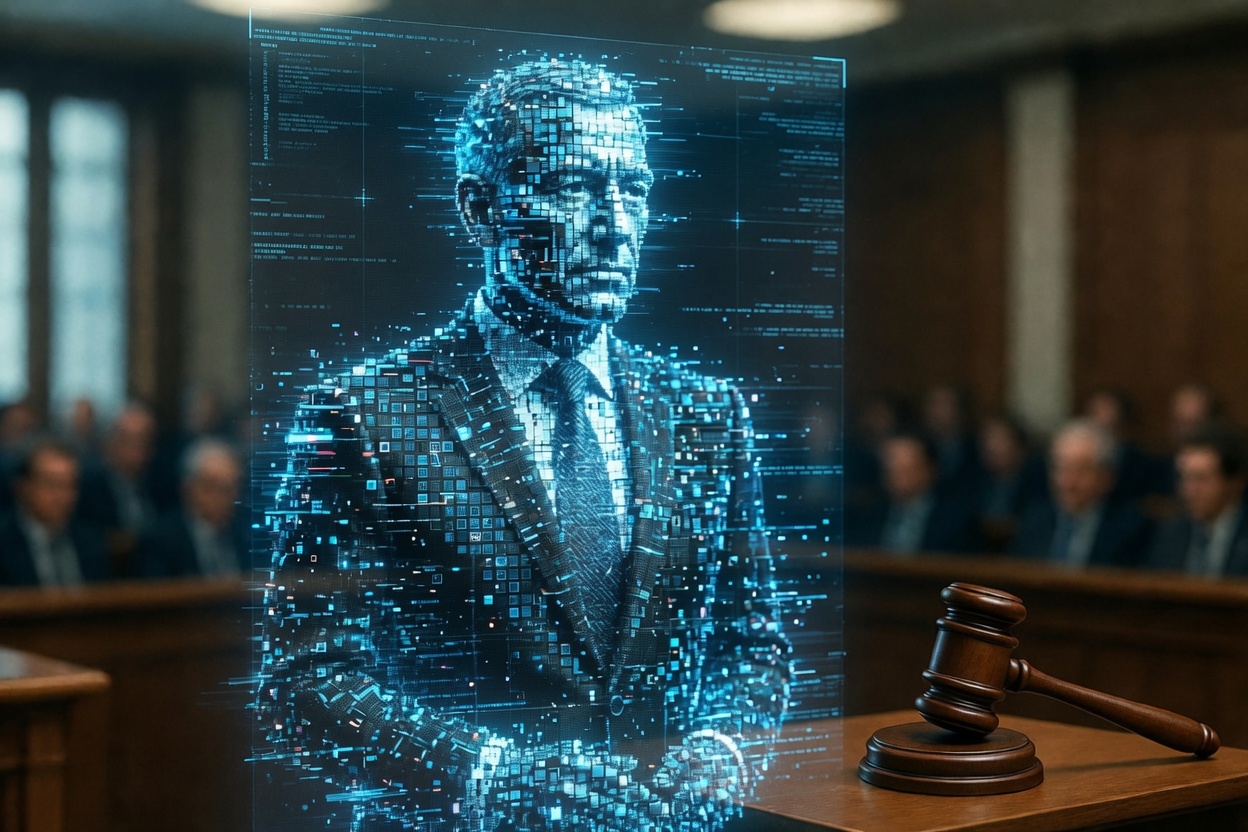
As artificial intelligence rapidly reshapes the American workplace, a difficult and increasingly unavoidable question is emerging: should employees who are replaced by AI systems have the right to sue their employers for wrongful termination? It’s a question that cuts to the core of free markets, property rights, and the social contract between labor and capital—and one that demands a sober, principled response rather than a purely emotional one.
At first glance, the argument for allowing such lawsuits may seem compelling. After all, a worker who has given years—or even decades—of service to a company can suddenly find himself replaced not by a more qualified human being, but by a machine. To many, that feels less like competition and more like displacement by an inanimate force, devoid of fairness or loyalty. There is a natural instinct to ask whether the law should step in to provide some remedy.
But that instinct, while understandable, runs headlong into a foundational principle of the American economic system: employment in the private sector is generally “at will.” That means employers retain broad discretion to hire, fire, and restructure their workforce as they see fit, so long as they do not violate specific statutory protections such as discrimination laws or contractual obligations. The introduction of AI does not fundamentally alter that principle; it merely represents the latest in a long line of technological advancements that have changed the nature of work.
History offers a useful perspective. The Industrial Revolution displaced artisans with machines. The advent of the automobile eliminated countless jobs tied to horse-drawn transportation. The computer age rendered entire categories of clerical work obsolete. In each case, the economy ultimately adapted, creating new industries and opportunities even as it destroyed old ones. Crucially, the law did not—and arguably could not—require employers to preserve outdated roles simply to avoid displacing workers.
Allowing employees to sue for wrongful termination solely because they were replaced by AI would mark a significant departure from this tradition. It would effectively impose a legal penalty on innovation, discouraging businesses from adopting technologies that increase efficiency and productivity. In a global economy where American firms compete with rivals who are under no such constraints, that kind of policy could have serious consequences for competitiveness and economic growth.
Moreover, drawing a clear legal line would be extraordinarily difficult. If replacing a worker with AI is grounds for a lawsuit, what about replacing a worker with a more efficient software tool? Or outsourcing a function to another company that uses automation? The distinction between “AI replacement” and other forms of cost-saving or productivity-enhancing decisions is not nearly as clean as it might appear. Attempting to regulate it through litigation would likely result in a flood of ambiguous, inconsistent cases that burden courts and create uncertainty for employers.
That said, rejecting wrongful termination claims in this context does not mean ignoring the human cost of technological change. There is a legitimate concern that AI could accelerate job displacement at a pace faster than workers can reasonably adapt. Entire sectors—from customer service to logistics to certain white-collar professions—are already feeling the pressure. Pretending that the market alone will seamlessly absorb these disruptions is overly optimistic.
The more constructive approach lies not in expanding liability for employers, but in strengthening the mechanisms that help workers transition. This includes policies that encourage retraining, vocational education, and workforce mobility. It also means rethinking how benefits such as healthcare and retirement savings are structured, so they are less tied to a single employer and more portable across careers. Private-sector initiatives, public-private partnerships, and targeted government programs all have a role to play here.
Employers themselves are not without responsibility. Companies that invest in their workforce—by offering reskilling opportunities or phased transitions rather than abrupt layoffs—are more likely to maintain morale, protect their reputations, and retain valuable institutional knowledge. While the law may not compel such behavior, market forces and cultural expectations increasingly reward it.
Ultimately, the question of whether employees replaced by AI should be able to sue for wrongful termination forces us to choose between two competing instincts: the desire to protect individuals from sudden economic harm, and the need to preserve the flexibility and dynamism that drive economic progress. However sympathetic the former may be, undermining the latter would be a costly mistake.
The American economy has always thrived on its ability to adapt, innovate, and evolve. Artificial intelligence is simply the next chapter in that story. Rather than attempting to litigate our way backward, the better course is to prepare workers for what comes next—equipping them not just to survive in an AI-driven world, but to succeed in it.