

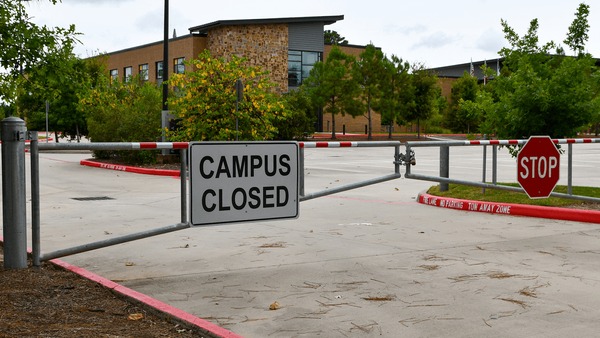
Artificial intelligence is emerging as another major force reshaping American higher education, with analysts warning that it could hasten the closure of financially vulnerable colleges already struggling with declining enrollment, rising costs, and growing skepticism about the value of traditional four-year degrees. As AI becomes increasingly capable of delivering personalized instruction, employers continue shifting toward skills-based hiring, and demographic declines reduce the number of college-age students, smaller institutions that rely heavily on tuition revenue face mounting financial pressure. While elite universities are expected to adapt by integrating AI into instruction and research, many regional private colleges may find themselves unable to compete in an educational marketplace that increasingly rewards flexibility, lower costs, and workforce-focused credentials.
Sources
- https://www.washingtontimes.com/news/2026/jul/13/ai-pushing-expected-rise-college-closures-analysts-say
- https://www.cato.org/commentary/what-make-wave-college-closures
- https://www.forbes.com/sites/scottwhite/2026/05/21/the-coming-college-crisis-what-colleges-students-and-government-must-do-now
- https://hechingerreport.org/threats-of-more-closings-have-colleges-and-students-worrying-about-how-to-save-themselves/
Key Takeaways
- • Artificial intelligence is intensifying financial and competitive pressures already threatening many tuition-dependent colleges.
- • Demographic decline, weakening confidence in expensive four-year degrees, and employer demand for demonstrable skills are converging to reshape higher education.
- • Colleges that fail to modernize curricula, embrace AI as a teaching tool, and align programs with labor-market demands face a growing risk of consolidation or closure.
In-Depth
For decades, America’s higher education establishment operated under the assumption that enrollment would continue growing, federal student aid would remain plentiful, and a bachelor’s degree would remain the default pathway to career success. That assumption is now colliding with economic reality. Artificial intelligence has not created higher education’s problems, but it is rapidly exposing longstanding weaknesses that universities have ignored for years.
Many smaller colleges have depended almost entirely on tuition revenue while expanding administrative bureaucracies, constructing expensive facilities, and offering degree programs whose graduates often struggle to justify the enormous cost of attendance. At the same time, birth rates have declined, leaving fewer traditional college-age students available to fill classrooms. AI now adds another disruptive force by making high-quality educational assistance available around the clock at little or no cost.
Employers are also changing. Increasingly, businesses prioritize practical abilities, certifications, and measurable competence over credentials alone. AI-powered training platforms allow workers to acquire marketable skills far more quickly than many traditional academic programs. That trend challenges universities whose value proposition rests more on institutional prestige than on producing graduates equipped for today’s economy.
None of this means colleges are destined to disappear. America’s strongest institutions will likely evolve by incorporating AI into research, instruction, and workforce preparation. Schools that produce engineers, healthcare professionals, scientists, and skilled tradespeople should remain indispensable. Those institutions understand that AI is a tool to enhance productivity rather than a substitute for human judgment and expertise.
The institutions facing the greatest danger are those that resist change while continuing to charge premium prices for increasingly commoditized education. Market competition—not government bailouts—has a way of exposing inefficient business models. Colleges that deliver genuine value, adapt to technological change, and prepare students for productive careers should survive and prosper. Those that cling to outdated assumptions may discover that AI merely accelerated an inevitable reckoning that demographic and financial realities had already set in motion.