

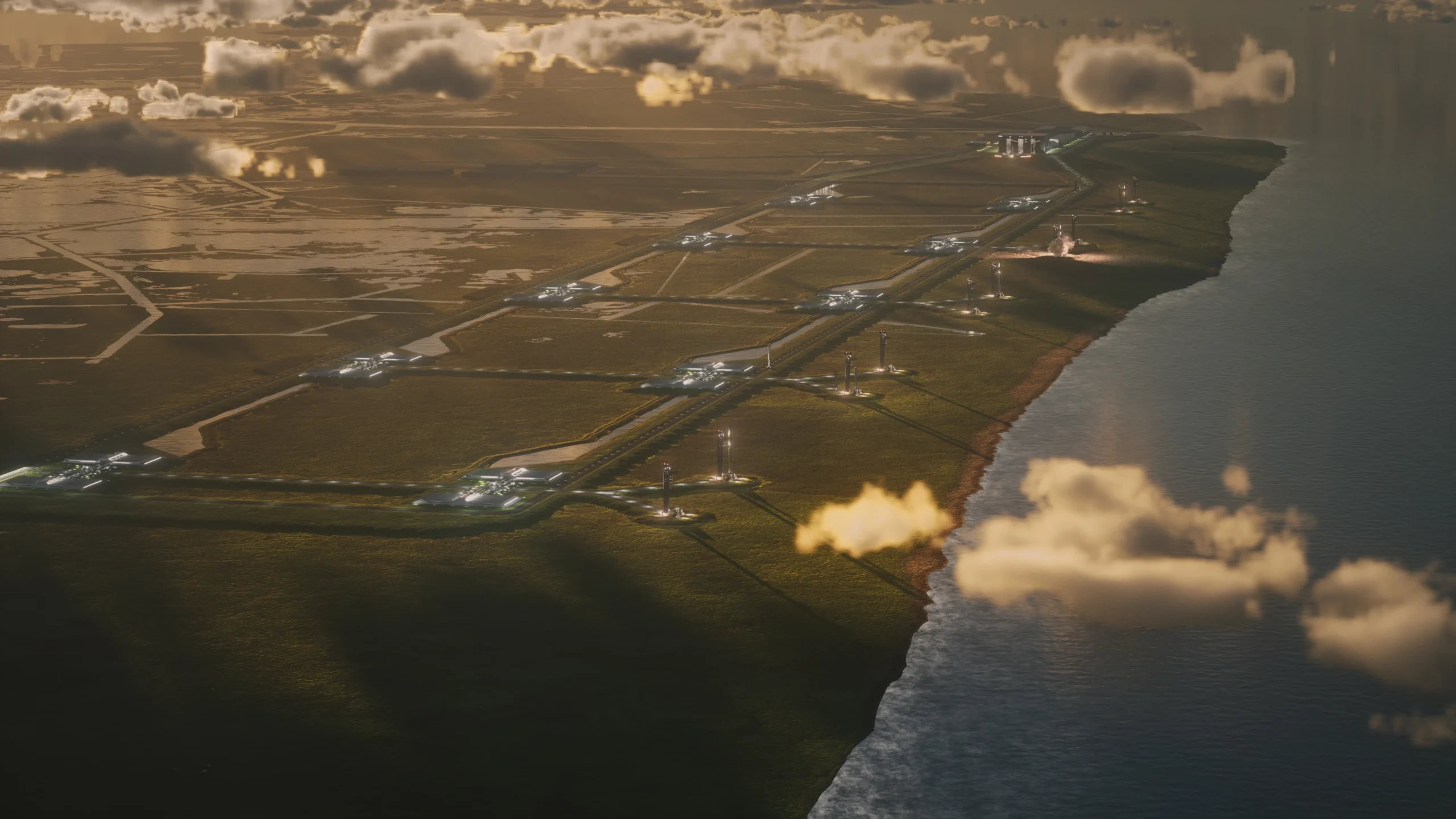
SpaceX‘s planned Starbase Louisiana represents a staggering expansion of America’s commercial space infrastructure, with a proposed $100 billion investment transforming roughly 125,000 acres near Pecan Island in Vermilion Parish into a largely self-contained spaceport. The project is expected to include as many as ten launch pads, onsite methane and liquid-oxygen production, dedicated electrical generation, deep-water shipping, employee housing and potentially an airport. Louisiana offers SpaceX several strategic advantages: a southern launch corridor over the Gulf, enormous amounts of available land, water access for transporting massive Starship components, proximity to major natural-gas infrastructure and room to escape some capacity constraints affecting Texas and Florida. The development could create thousands of high-paying jobs and establish Louisiana as a major center of American aerospace activity, although the extraordinary public incentives accompanying the project warrant careful taxpayer scrutiny.
Key Takeaways
- SpaceX intends to invest $100 billion in Starbase Louisiana, developing a 125,000-acre complex capable of supporting thousands of Starship launches annually, with construction beginning by the end of 2027 and the first launch targeted as early as 2029.
- Louisiana offers unusual strategic advantages for Starship: open Gulf launch trajectories, deep-water transportation, abundant land, extensive natural-gas infrastructure and the ability to manufacture or process enormous quantities of rocket propellant onsite rather than relying on truck deliveries.
- The project promises 3,000 direct jobs and roughly 8,100 indirect jobs, but Louisiana’s estimated $27.5 billion incentive package makes performance requirements, taxpayer protections and long-term economic returns important measures of whether the deal ultimately succeeds.
In-Depth
Starbase Louisiana is shaping up as far more than another launchpad. SpaceX plans to invest $100 billion in a 125,000-acre complex near Pecan Island in Vermilion Parish, with five two-pad launch complexes, propellant infrastructure, power generation, employee housing and deep-water access. Construction is expected to begin by the end of 2027, with the first launch targeted as early as 2029. State projections call for 3,000 direct jobs over ten years, averaging $92,600 annually, plus roughly 8,100 indirect jobs.
The location reflects practical advantages. Starship’s enormous dimensions make water transportation important, while Louisiana’s Gulf access provides a useful corridor for launches and barge movement. The region also sits amid extensive natural-gas infrastructure and liquefaction expertise. At the launch cadence SpaceX envisions, trucking thousands of tons of methane and liquid oxygen would become logistically untenable. Producing and processing propellant onsite could remove a major bottleneck.
Louisiana also gives SpaceX additional launch capacity beyond Texas and Florida. Federal launch licensing, airspace, environmental review and crowded launch corridors can constrain expansion even when rockets and pads are available. A second Starbase creates redundancy and room for higher flight rates.
The public-policy question is whether Louisiana’s concessions justify the return. The incentive package has been estimated at $27.5 billion, dominated by long-term property-tax relief, although local governments are slated to receive payments in lieu of taxes. If SpaceX delivers the promised investment, employment and aerospace ecosystem, Louisiana could gain an industrial anchor. If projections fall short, taxpayers will scrutinize the bargain. Accountability must accompany ambition.
Sources
- https://www.opportunitylouisiana.gov/spacex
- https://www.reuters.com/business/media-telecom/spacex-build-starship-spaceport-louisiana-2026-08-25/
- https://arstechnica.com/space/2026/08/spacex-intends-to-invest-up-to-100-billion-in-massive-louisiana-spaceport/
- https://lailluminator.com/2026/09/01/spacex-tax-breaks/