

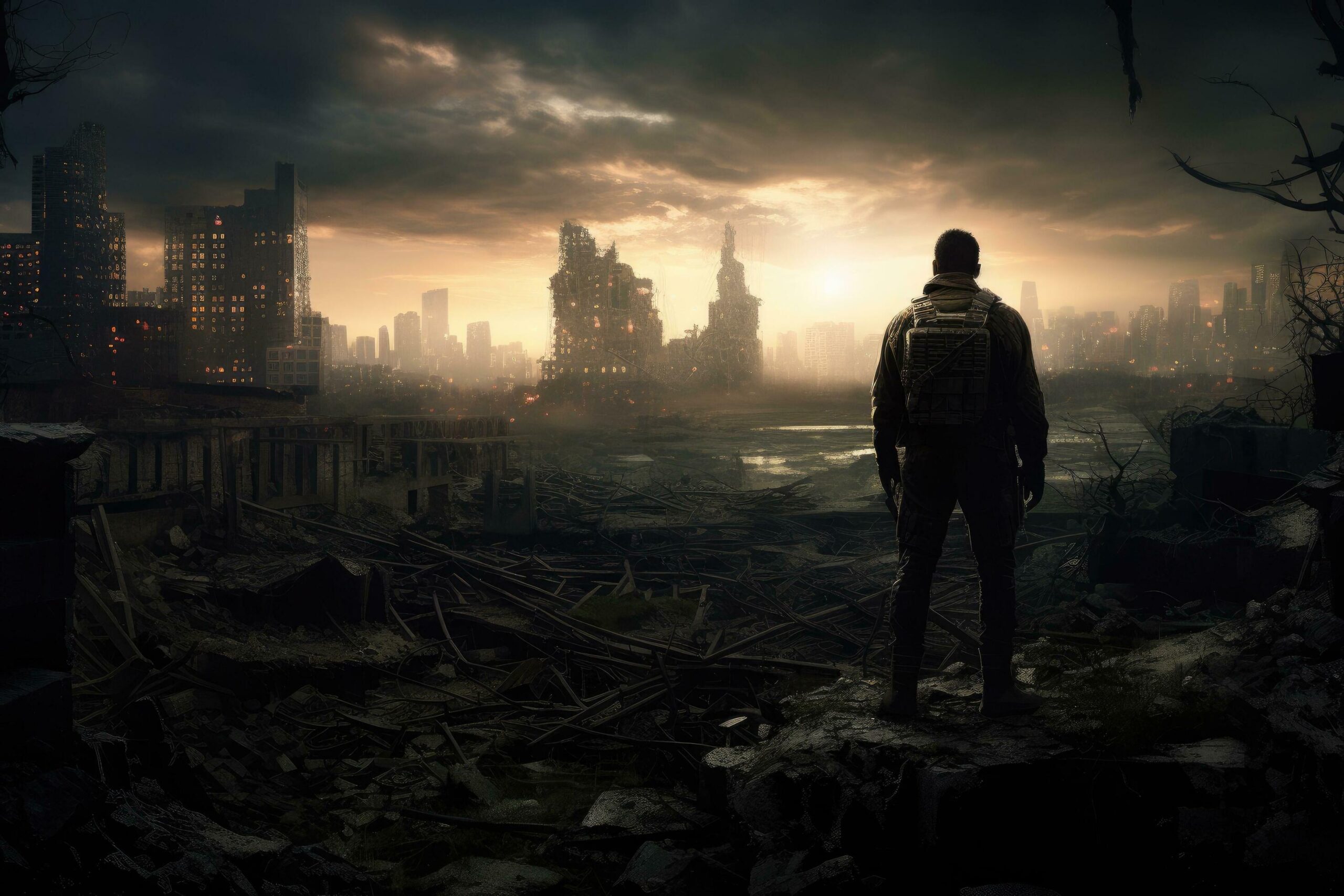
Imagine waking up tomorrow and discovering that artificial intelligence—every algorithm, every machine-learning system, every automated decision engine—had simply ceased to exist. Not degraded, not malfunctioning, but gone. The silence would not be audible, yet it would be unmistakable. In an age that has quietly but thoroughly woven AI into the fabric of daily life, its sudden disappearance would feel less like a technological setback and more like a civilizational shock.
At first, the disruption would present as inconvenience. Search engines would lose their uncanny ability to anticipate queries. Navigation apps would revert to static maps. Email filters would flood inboxes with spam. Streaming platforms would stop recommending anything at all. The conveniences people have come to expect—instant translations, voice assistants, predictive text—would vanish overnight. What had once felt like seamless digital intuition would be replaced by clunky, manual processes. For many, this would be the first realization of how deeply AI has embedded itself into routine life.
But inconvenience would quickly give way to systemic strain. Modern supply chains rely heavily on AI to forecast demand, optimize logistics, and manage inventory. Without it, distribution networks would slow dramatically. Supermarkets would struggle to stock shelves efficiently. Transportation systems, from airlines to shipping fleets, would face delays and inefficiencies. The global economy, already a complex and fragile organism, would feel the shock almost immediately.
Financial markets would be particularly vulnerable. Algorithmic trading, which now accounts for a significant portion of market activity, would disappear, removing liquidity and increasing volatility. Risk assessment models used by banks and insurers would revert to more primitive forms, if they functioned at all. The result would likely be uncertainty bordering on panic, as institutions scrambled to reestablish control using human-driven processes that had long since been supplemented—or replaced—by machine intelligence.
Healthcare would face its own crisis. Diagnostic tools powered by AI, which assist in detecting diseases from imaging and data analysis, would no longer be available. Drug discovery pipelines that rely on machine learning to model compounds would stall. Even administrative systems that help manage patient flow and resource allocation would falter. While medicine existed long before AI, the sudden removal of these tools would create gaps that could not be immediately filled, potentially affecting patient outcomes.
National security and defense systems would also be impacted. Intelligence agencies depend on AI to analyze vast amounts of data, identify threats, and support decision-making. Without it, the ability to process information at scale would be severely diminished. Military operations that rely on autonomous or semi-autonomous systems would need to be rethought. In a world already fraught with geopolitical tension, such a shift could introduce new uncertainties and risks.
Yet amid the disruption, there would be a countercurrent—one that forces a reassessment of priorities and capabilities. The disappearance of AI would compel societies to rediscover human-centered skills that have been gradually sidelined. Critical thinking, craftsmanship, and direct expertise would regain prominence. Professions that had begun to lean heavily on automation would need to rebuild their foundations on human judgment and experience.
There would also be a renewed appreciation for resilience. Overreliance on any single technology, no matter how powerful, carries inherent risks. The sudden absence of AI would serve as a stark reminder that efficiency and convenience must be balanced with redundancy and adaptability. Systems designed with human oversight and fallback mechanisms would prove far more durable than those built on the assumption of uninterrupted machine support.
Culturally, the change could be profound. Social media platforms, stripped of algorithmic amplification, might become quieter and less polarized. Content would no longer be curated to maximize engagement through predictive models. While this would not eliminate disagreement, it could reduce the intensity and frequency of digital echo chambers. Communication might become more deliberate, less reactive.
Over time, the world would stabilize, but it would not return to its previous state. Some industries would rebuild AI capabilities from the ground up, perhaps with a greater emphasis on transparency and control. Others might choose a different path, favoring simpler, more human-driven systems. The balance between automation and human agency would likely shift, informed by the lessons of sudden absence.
The vanishing of artificial intelligence would not mark the end of progress, but it would redefine it. Stripped of one of its most powerful tools, humanity would be forced to confront both its dependencies and its strengths. In that confrontation lies an opportunity—not just to rebuild what was lost, but to reconsider what should never have been surrendered in the first place.