

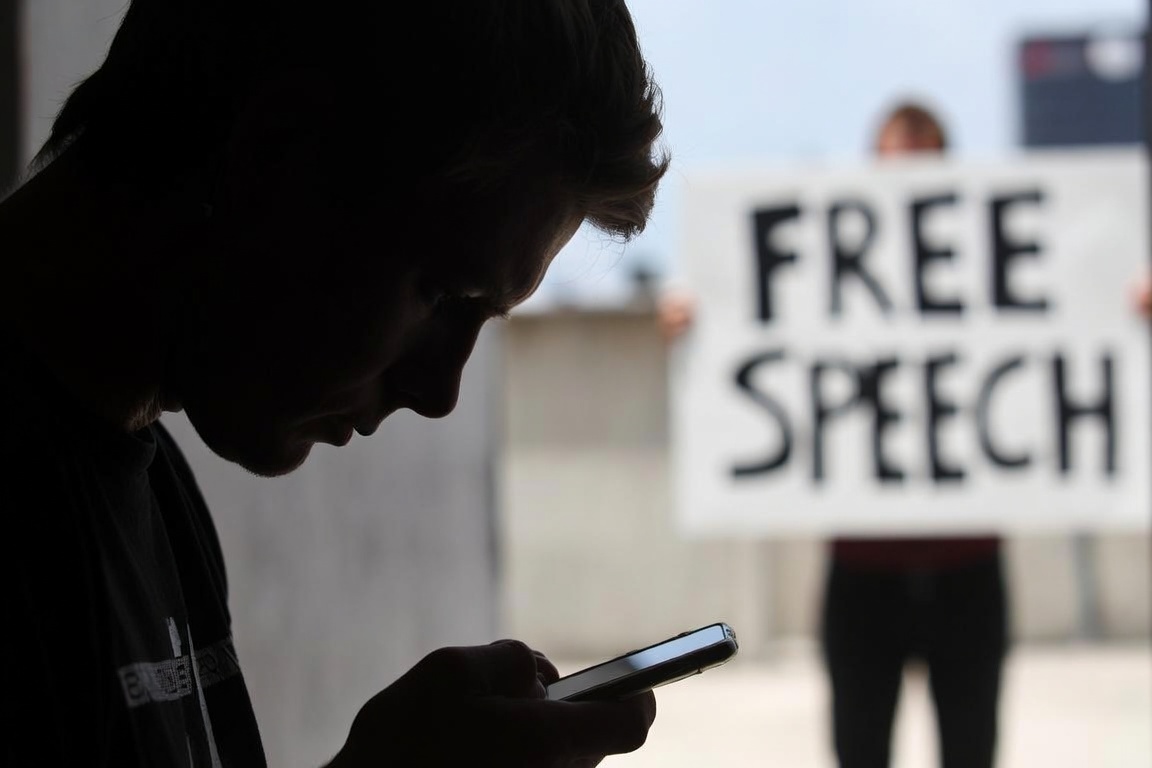
There is a growing push across the United States and the broader Western world to restrict or outright ban social media access for minors. Proponents argue that such measures are necessary to protect adolescents from a digital ecosystem that is, at best, psychologically corrosive and, at worst, predatory. Opponents counter that these bans risk trampling on foundational principles of free expression, parental authority, and individual liberty. The tension between these positions is not merely political—it cuts to the core of how a free society governs itself in the face of rapid technological change.
On one side of the ledger, the case for restricting teen access to social media is not difficult to understand. Mounting evidence suggests a correlation between heavy social media use and increased rates of anxiety, depression, and social isolation among young people. Platforms engineered for engagement often amplify outrage, comparison, and addiction. Algorithms do not distinguish between a developing adolescent mind and a fully formed adult one; they simply optimize for attention. In that sense, the digital landscape resembles an unregulated marketplace where minors are exposed to influences they are not equipped to process.
From a conservative standpoint, this concern aligns with a long-standing belief in protecting the family unit and shielding children from harmful external forces. Just as society restricts access to alcohol, tobacco, and certain forms of media, it is not unreasonable to question whether social media—given its demonstrated psychological effects—deserves similar scrutiny. A limited ban, or at least age-based restrictions, can be framed not as censorship but as a form of prudential regulation aimed at safeguarding the next generation.
Yet this is where the issue becomes more complicated. Once the government assumes the authority to determine who can speak, who can listen, and under what conditions, it inevitably brushes up against the First Amendment. Social media platforms, for all their flaws, have become modern public squares. They are places where ideas are exchanged, movements are formed, and dissent is voiced. To exclude an entire class of individuals from that space—particularly one as large and diverse as “teenagers”—raises legitimate constitutional concerns.
Moreover, the enforcement of such bans introduces a host of practical and philosophical problems. Who verifies age, and how? What data must be collected to do so, and who safeguards it? In attempting to protect minors, policymakers may inadvertently create systems that erode privacy for everyone. There is also the question of precedent. If the state can restrict access to digital platforms for one group in the name of public health, what prevents it from extending that logic to other groups or other forms of speech?
A more traditionally conservative objection centers on the role of parents versus the role of the state. Families, not bureaucracies, have historically been tasked with guiding children’s development. A sweeping government ban risks displacing parental judgment with one-size-fits-all mandates. Not all teenagers are equally vulnerable, and not all households approach technology in the same way. Empowering parents with tools and information may be more consistent with limited-government principles than imposing blanket prohibitions from above.
There is also a cultural dimension that cannot be ignored. Social media, despite its many downsides, is deeply woven into the fabric of modern communication. It is where young people socialize, organize, and, increasingly, learn. Removing them entirely from that environment may produce unintended consequences, including social fragmentation or a lack of digital literacy. In a world where online engagement is often a prerequisite for participation in civic and economic life, total exclusion may do as much harm as good.
The challenge, then, is not to choose between absolute freedom and absolute restriction, but to navigate the narrow space between them. Thoughtful regulation—focused on transparency, algorithmic accountability, and age-appropriate design—may offer a more balanced path forward. So too might policies that reinforce parental control rather than replace it. The goal should be to mitigate harm without undermining the fundamental liberties that define an open society.
In the end, the debate over social media bans for teens is a microcosm of a larger struggle: how to preserve freedom in an age of unprecedented technological power. It is a question without easy answers, but one that demands careful consideration. Protecting children and protecting liberty are not mutually exclusive aims—but achieving both requires restraint, clarity, and a deep respect for the principles that have long guided the American experiment.